
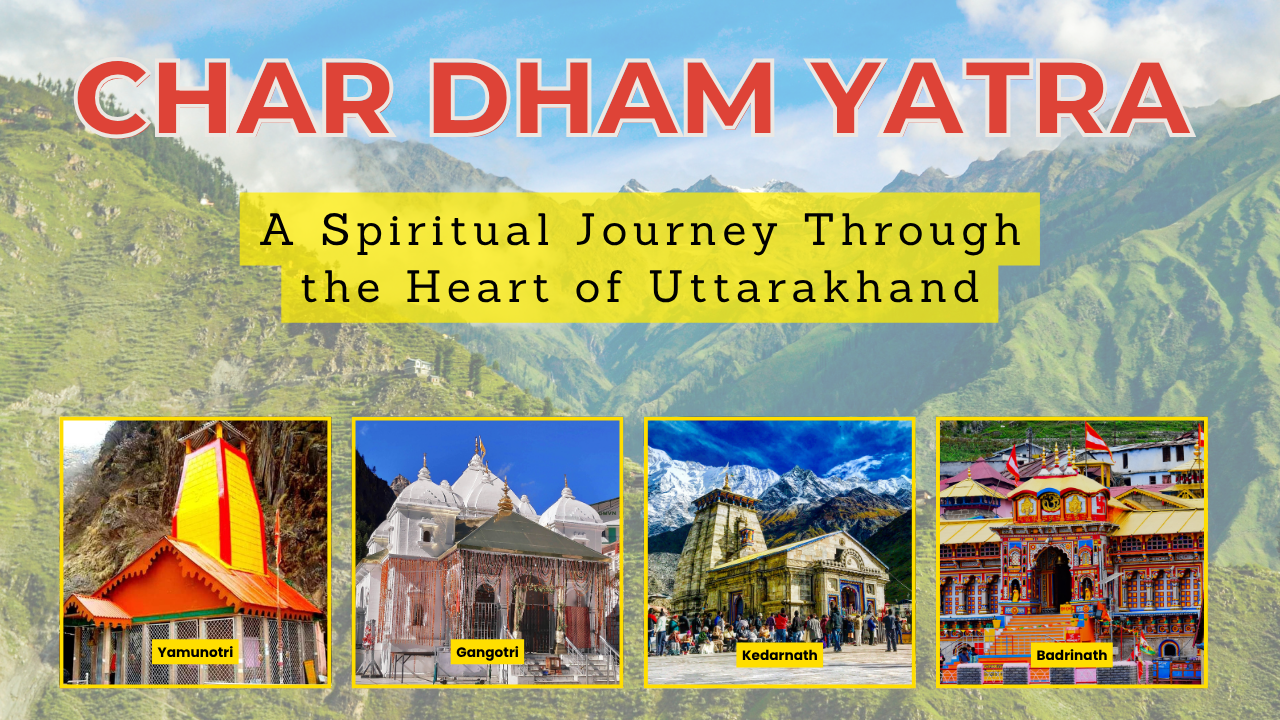
Embark on the spiritually enriching Char Dham Yatra through the majestic Himalayas of Uttarakhand. This guide covers everything you need to know about visiting the four spiritual shrines—Yamunotri, Gangotri, Kedarnath, and Badrinath. From travel tips and the best time to visit, to pilgrimage significance and must-see sights along the way, this blog is your complete companion for a divine Himalayan adventure in 2025.
2025 is the ideal year for a Char Dham Yatra for several reasons. First, this year the yatra falls under significant spiritual events that further strengthen the sanctity of the pilgrimage. Second, new developments such as improved road conditions, expanded highways, more hotel options and helicopter services have made the yatra safer and more accessible than before. Additionally, improvements in emergency and medical services have made the journey easier, giving followers an even more intense and spiritual experience amid the scenery of the Himalayas.
What is Char Dham Yatra?
One of the holiest pilgrimages in Hinduism, the Char Dham Yatra takes you on a divine journey to four holy temples in the Himalayas of Uttarakhand: Yamunotri, Gangotri, Kedarnath, and Badrinath. These places have religious and mythological significance and are believed to help attain salvation and purify the soul. Undertaking this journey is considered a once in a lifetime opportunity that connects devotees with amazing energy, breathtaking views and centuries-old divine heritage. A more in-depth overview of the four holy Dhams is given below:
- Yamunotri
Uttarakhand, the first dham of the Char Dham Yatra, Yamunotri is located at an altitude of 3,293 meters in the Garhwal Himalayas, the source of the Yamuna river, the daughter of the Sun and the sister of Yama, the god of death. The path to this Dham is filled with stunning views, hot natural springs, and forests, which provide a powerful start to the Char Dham Yatra with spiritual energy, peace, and beauty to the human being. Before visiting Yamunotri, pilgrims take a bath in Surya Kund, a natural hot spring, that is believed to have amazing powers to purify the mind.
- Gangotri
Gangotri is the origin of the river Ganges, one of the holiest rivers in Hinduism is the second dham of the Char Dham Yatra. It is situated at a height of 3,100 meters in Uttarkashi. The Gangotri temple, where Goddess Ganga is believed to have descended from heaven to earth to purify the souls of people.
Surrounded by snow-capped peaks and dense deodar forests, Gangotri is a peaceful and spiritual destination. Pilgrims gather here to offer prayers, take a dip in the icy waters of Bhagirathi, the main tributary of the Ganges, and to engage in deep spiritual contemplation on the Ganges as the source of purity of life and salvation. Just beyond Gangotri is Gaumukh, the actual glacial source of the Ganges, which people can reach through an exciting trek.
- Kedarnath
The third famous destination in the Uttarakhand Char Dham Yatra Kedarnath, a temple dedicated to Lord Shiva, and one of the twelve Jyotirlingas, which makes it a very powerful spiritual place for Shiva believers. It is located at 3,583 meters in the Garhwal Himalayas. Kedarnath, a snow-covered mountain situated near the Mandakini River, is a wonderful combination of spiritual energy and with beauty of nature. According to ancient texts, the Pandavas built the foretime Kedarnath temple, which is believed to be more than a thousand years old. It was later revived by Adi Shankaracharya. To reach the temple, pilgrims travel more than 16 km from Gaurikund, which is a tough but spiritually moving journey filled with devotion, stunning views and a sense of heavenly connection. To reach the temple, pilgrims have to travel about 16 km from Gaurikund – it is a tough but spiritually invigorating trek filled with devotion, stunning views and a sense of heavenly connection. A trip to Kedarnath is much more than just a pilgrimage; it is a life-changing event that speaks of inner peace, faith, and perseverance.
- Badrinath
Badrinath, the last and most famous place of the Char Dham Yatra, is a temple dedicated to Lord Vishnu in his incarnation as Badri Narayan. It is situated between the Nar and Narayan mountain ranges, and an altitude of 3,133 meters in the Chamoli district of Uttarakhand, and the Alaknanda river flows nearby.
According to mythology, Badrinath is the place where Lord Vishnu meditated for thousands of years under the Badri tree. The temple, with its colourful exterior and golden shikara, is one of the most important pilgrimage sites in Hinduism and is part of the Uttarakhand Char Dham and the Main Char Dham Yatra. All over the world, pilgrims come to seek blessings, witness the daily rituals, and immerse themselves in the divine energy of this pristine and serene Himalayan sanctuary. The spiritual atmosphere, coupled with the surroundings, makes Badrinath a truly unforgettable and soul-purifying experience.
Who should consider this journey?
The Char Dham Yatra is a journey that attracts a variety of travelers.
- Spiritual Seekers
Spiritual People will find deep meaning in visiting these sacred pilgrimage places of Uttarakhand, India, participating in rituals, and walking the same paths where traveled by scholars and saints for centuries.
- Adventure Lovers
Adventurous people are attracted to Uttarakhand’s high-altitude roads, breathtaking treks, and rugged Himalayan terrain that test endurance and reward with attractive views.
- Nature Enthusiasts
Nature lovers will be enchanted by snowy peaks, pristine rivers, dense forests, and serene valleys that make the route a visual and soulful retreat.
Route and Accessibility of Char Dham
- Traditional route and travel sequence
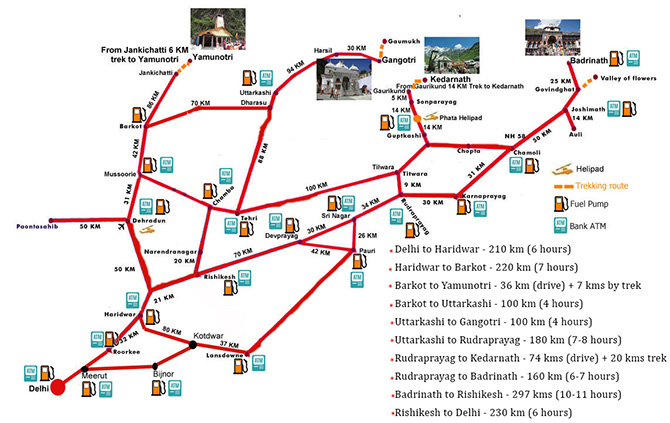
The traditional way of the Uttarakhand Char Dham Yatra starts from the west and moves towards the east, covering the four Dhams in the following order: Yamunotri → Gangotri → Kedarnath → Badrinath
- Modes of transport
Pilgrims can visit the Char Dham Yatra by various modes of transport, for example, by road, train, and helicopter, which offer flexibility for travellers depending on their preferences, budget, and physical condition. Here are the common modes of transport used:
- By Train
Trains are affordable and convenient for long-distance travel to the starting point of the yatra. To reach Haridwar or Rishikesh train is most easiest way. Haridwar or Rishikesh is well connected by the Indian Railways. By taking this option, Pilgrims start their Char Dham Yatra by taking a train to Haridwar or Rishikesh (both well-connected by the Indian Railways network). After reaching these places, they can start their journey to the Char Dham by road, bus or taxi.
- By Road (Car, Taxi, and Buses)
- Private Car/Taxi: This is one of the most comfortable options to travel, especially for families or friend groups (4 to 7 people). Travellers can hire taxis from Delhi, Haridwar, Rishikesh, or Dehradun and travel to each of the four dhams. You can book Taxis for the entire route or specific sections.
- Buses: When you are a solo traveler, this is one of the most convenient and affordable options to visit the Char Dham. Uttarakhand’s GMOU (Garhwal Mandal Development Corporation) operates regular bus services to the Char Dhams from Dehradun, Haridwar, and Rishikesh. You can also use private buses from a tour operator to run the Char Dham.
- Air / Helicopter Services
This option is more convenient for those who have mobility issues or a short time and are looking for quick and convenient travel. For that, two options are available: one from Dehradun (Jolly Grant Airport) and the other from Phata (near Kedarnath) to Yamunotri, Gangotri, Kedarnath, and Badrinath. These services reduce the traveling time. You can also use a flight to reach Jolly Grant Airport, Dehradun.
- Badrinath to Kedarnath: These helicopter services frequently connect Badrinath to Kedarnath, saving more time compared to road travel and the long journey to Kedarnath.
- Yamunotri and Gangotri: Helicopter services are also provided direct option to Yamunotri and Gangotri from selected points.
- By Trek (for Yamunotri and Kedarnath)
- Yamunotri Trek: The journey to Yamunotri started from Janaki Chatti, which is about 6 km. Trekkers reach this Dham while watching beautiful Himalayan views. Ponies and palanquins are also available for those who do not able or prefer not to walk.
- Kedarnath Trek: The most challenging but rewarding part of the Char Dham Yatra, the trek from Gaurikund to Kedarnath is about 16 kilometers uphill. This trek can take between 6 to 8 hours, depending on the pace. Ponies, palanquins, and portable stretchers are available for those who need assistance.
- By Pony/Doli (Palanquin)
ponies and palkis (palanquins) are available for those who are not preferred and able to trek at several points along the route. This is useful for the Yamunotri and Kedarnath treks. A palanquin can carry a single person and is typically carried by two to four people.
These transport options make it easier than ever for pilgrims of all ages and fitness levels to experience the Char Dham Yatra. Whether you prefer a more traditional journey by foot or a modern, hassle-free experience via helicopter, there’s a transport choice that suits everyone.
Starting point suggestions
- Haridwar: The Spiritual Gateway
- Why Choose Haridwar?
- Haridwar is one of the holiest cities in India and an important destination for pilgrims.
- Direct connectivity from Delhi by bus, train, and taxi.
- There are plenty of accommodation options, tour companies and local guides available at reasonable prices.
- Ideal for: Travellers who wish to start their journey with rituals and a holy dip in the Ganga.
- Pro Tip: If you are starting your journey from Haridwar, make sure to witness the Ganga Aarti at Har Ki Pauri first.
- Rishikesh: The Yoga Capital
- Why Choose Rishikesh?
- It is a more peaceful and picturesque place than Haridwar, which has both health and spirituality.
- It is closest to Dehradun airport and well-connected by road.
- A perfect place to unwind and prepare psychologically for an adventure in the mountains.
- Ideal for: Travellers who are looking for peace, meditation and a more tranquil environment to start their journey.
- Pro Tip: Before you go, take a yoga or meditation class and explore Ram Jhula and Lakshman Jhula.
- Dehradun: A wise choice for travellers
- Why Choose Dehradun?
- It is the most convenient location for the quick traveler as it has the Jolly Grant Airport.
- It is the Char Dham Yatra’s starting point for many helicopter services.
- Modern facilities and direct road access to all the Char Dhams characterise this well-developed metropolis.
- Ideal for: Those people who are short on time or want to luxury travel option can use helicopter services.
- Pro Tip: Book a helicopter slot well in advance when departing from Dehradun to avoid last-minute stress.
✅ Which One Should You Choose?
| Need / Preference | Best Starting Point |
| Spiritual & Traditional Experience | Haridwar |
| Peaceful, Scenic, Yoga Vibes | Rishikesh |
| Fast Travel & Air Connectivity | Dehradun |
All three are excellent launchpads, and you can’t go wrong with any—just choose based on your convenience, comfort, and travel style.
- Map or visual guide (optional)
Best Time to Visit in 2025
The Char Dham Yatra is a seasonal pilgrimage that typically opens in late April or early May and closes around late October or early November. The best time to visit in 2025 depends on weather conditions, crowd levels, and personal preferences.
🗓️ Ideal Time to Visit:
May to June (Spring to Early Summer)
- Why: Pleasant weather, clear skies, and blooming Himalayan landscapes.
- Pros: Great for trekking, photography, and scenic beauty.
- Cons: High footfall due to summer vacations—book in advance.
☔ July to Mid-September (Monsoon)
- Why: Least recommended due to heavy rainfall and risk of landslides.
- Cons: Roads may get blocked; travel disruptions are common.
- Tip: If you must travel, check weather and road advisories daily.
🍁 Mid-September to October (Post-Monsoon / Autumn)
- Why: Fewer crowds, crisp air, and stunning post-monsoon landscapes.
- Pros: Safer than the monsoon season and perfect for a peaceful experience.
- Cons: It can get chilly at higher altitudes, so pack warm clothes.
🔚 Yatra Closure (End October / Early November)
- The temples usually close around Bhai Dooj, just after Diwali, due to snowfall. Final darshans happen around this time.
- Yatra opening and closing dates (typically from April/May to October/November)
- Ideal months for travel (May–June and September–October for pleasant weather and lighter crowds)
- Festival and special dates to consider
Preparation Tips
- Physical Fitness:
- To improve stamina, start walking or jogging 20 to 30 days before your trip.
- Start yoga or deep breathing practice. It is helpful for high altitudes and long travel days.
- Consult your doctor before travel if you have high blood pressure, asthma, diabetes, or any heart issues.
- Travel Planning
- Book accommodations (dharamshalas, budget hotels, GMVN guest houses, camps) and transport early (especially May–June).
- If you are new to the area, you can also hire a travel agent who will do all the work for you.
- Keep buffer days for weather-related delays or health-related issues.
- Share your travel itinerary with your friends and family.
- Carry a power bank and offline maps for a safer side.
- Download a Char Dham guide app, carry a printed map, and an emergency contact list.
- Check weather readiness and road conditions before the visit.
- Make a proper budget for travelling.
- Packing Essentials:
- Carry warm clothing, especially in Kedarnath and Badrinath, where the weather can be unpredictable. So, carry thermal wear, jackets, gloves, woolen socks, and caps even in summer.
- Keep rain protection like a good-quality raincoat or poncho, and waterproof bags, especially for the monsoon season (July–September).
- For tracking or walking, take comfortable footwear like shoes with a good grip are must, especially for Yamunotri and Kedarnath treks.
- Other Essentials: Sunglasses & sunscreen, Personal toiletries, Quick-dry towel, Flashlight or headlamp, Water bottle & energy snacks and many more.
- Registrations, Permits & Documents
- Valid ID Proof (Aadhar, Voter ID, Passport, etc.)
- Char Dham Registration: Mandatory for 2025 – register online or at designated counters, prefer online registration to prevent a last-minute rush.
- Keep hard & soft copies of hotel bookings, tickets, and emergency contacts.
- Health checks and travel insurance
- Carry a personal first-aid kit:- Pain relievers, motion sickness tablets, Cold & cough medication, Antiseptic cream, band-aids, and crepe bandage.
- Altitude sickness medicine (like Diamox, with doctor consultation)
- Spiritual & Cultural Insights
- Learn about the history & importance of each dham.
- Rituals, customs, and dos & don’ts for pilgrims.
- Carry your prayer items or rudraksha mala if you use them.
Must-See Places Along the Route
- En Route to Yamunotri
- Janki Chatti – Starting point of the 6 km trek to Yamunotri, surrounded by hot springs and scenic beauty.
- Hanuman Chatti – A peaceful spot at the confluence of the Hanuman Ganga and Yamuna rivers.
- Surya Kund – A natural hot water spring near the temple, used to cook prasad (potatoes/rice).
- Divya Shila – A rock pillar near the temple, worshipped before entering Yamunotri.
- En Route to Gangotri
- Barkot & Uttarkashi – Scenic hill towns, perfect for rest, views, and local temple visits (like Vishwanath Temple).
- Harsil – A hidden gem with apple orchards, pine forests, and the Bhagirathi River.
- Gaumukh Glacier (optional trek) – The actual source of the Ganga river; a sacred and adventurous trek from Gangotri.
- Pandav Gufa – A legendary cave believed to be where the Pandavas meditated.
- En Route to Kedarnath
- Dhara Devi – A highly revered shrine dedicated to Goddess Kali in her wrathful form.
- Guptkashi – Known for the Vishwanath Temple and Ardhnarishwar Temple.
- Sonprayag – Scenic spot at the confluence of Son and Mandakini rivers.
- Gaurikund – Starting point of the 16 km trek to Kedarnath; associated with Goddess Parvati.
- Rambara – A quiet resting spot during the Kedarnath trek (ruins remain from the 2013 floods).
- Bhairavnath Temple – Near Kedarnath, this temple is dedicated to Lord Bhairav, the guardian deity.
- En Route to Badrinath
- Alaknanda River – A Sangam of Ganga and Bhagirathi River.
- Triyuginarayan Temple – Believed to be the wedding site of Shiva and Parvati
- Chopta – The ‘Mini Switzerland of India’, great for views and short hikes.
- Joshimath – Gateway to Badrinath, with Narasimha Temple and Shankaracharya Math.
- Mana Village – India’s last village before the Tibetan border.
- Vyas Gufa & Ganesh Gufa – Caves where Ved Vyas is believed to have composed the Mahabharata.
- Tapt Kund – A natural hot spring near the Badrinath temple, believed to have healing properties.
- Nature spots and hidden gems to explore
- Valley of Flowers & Hemkund Sahib (from Govindghat, near Badrinath) – Breathtaking treks if you have time.
- Rishikesh & Haridwar – Great for spiritual experiences, Ganga Aarti, yoga, and cultural immersion.
Conclusion
The Char Dham Yatra is an interior journey as much as a journey over the magnificent Himalayas. It combines the richness of India’s cultural legacy, the spiritual awakening of divine connection, and the emotional depth of introspection. Not only do you return with memories at the conclusion of the voyage, but you also get a fresh feeling of devotion, purpose, and serenity. Everyone can gain something important on the Char Dham Yatra, whether it is blessings, adventure, or spiritual enlightenment. In 2025, invite the mountains to come to you so that you can truly experience, heal, and believe in the sacred essence of the Himalayas.
As you plan your yatra in 2025, do so with devotion in your heart and respect for the region, its people, and its fragile natural beauty. This pilgrimage is a blessing – tread gently, with gratitude and reverence.
🙏 Have you already taken the Char Dham Yatra, or are you planning to go?
We’d love to hear your thoughts, experiences, or any questions you may have. Drop them in the comments below and let’s inspire one another through this sacred journey.